

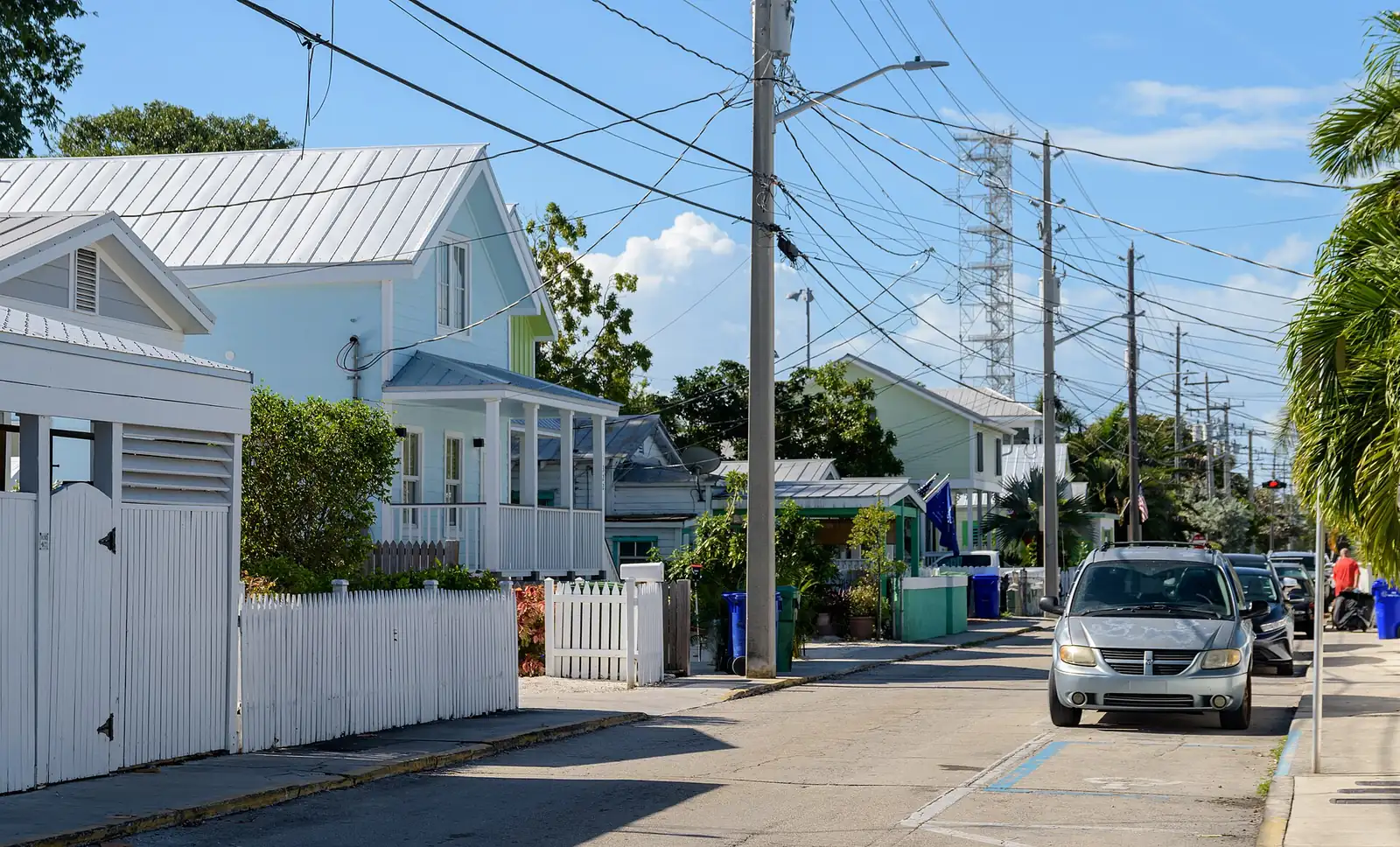
An easement on a block of land is a legal right that lets someone else use part of the land for a specific purpose, such as running power lines, sewer pipes, drainage, or a driveway, even though you own the land. The easement is usually recorded on the title and stays with the land when it is sold. It can limit where and what you can build.
The phrase “block of land” is common in Australia, but easements work in a broadly similar way in the United States and other common-law countries. Details differ by country and state, so treat this as a general overview. Our in-depth guide to easements on land covers US-specific types and how to negotiate them.
What does an easement mean in simple terms?
Think of an easement as a permanent permission attached to the land. You still own the strip of land the easement covers and usually pay tax on it, but someone else has the right to use it in a defined way. The person or organization holding the right might be a neighbor, a utility company, or a government body.
What are the common types of easements?
- Utility easements. Allow power, water, gas, telecommunications, or sewer providers to install and maintain lines, often along a lot boundary.
- Drainage easements. Allow stormwater to flow across the land through pipes, channels, or swales.
- Access easements (rights of way). Allow a neighbor or the public to cross part of the land to reach another property. See our article on landlocked property and road access.
- Party wall or support easements. Common with attached housing, covering shared walls or structural support.
- Conservation easements. Restrict development to protect natural features, usually held by a land trust or government agency.
How do you find out if a block of land has an easement?
Easements are usually shown on the title documents and survey or plan of subdivision. In the US, check the deed, title commitment, and recorded plat at the county recorder’s office. In Australia, easements typically appear on the certificate of title and the registered plan. A title search, conveyancer, real estate attorney, or surveyor can confirm what applies. Some rights, such as long-used access, may exist even if not recorded, depending on local law.
Can you build on an easement?
Usually you cannot place permanent structures, such as a house, garage, or pool, on an easement if it would interfere with the easement holder’s rights. Some authorities allow fences, gardens, or driveways over certain easements, often with conditions or written consent, and may not be responsible for restoring what they disturb during repairs. Always check with the easement holder and local council or permit office before building near one.
How does an easement affect the value of land?
The effect depends on size and location. A narrow utility easement along the back boundary may have little effect, while a large drainage easement through the middle of a small block can significantly reduce the buildable area. Buyers and lenders look at how much of the land is affected and whether it restricts likely uses. A survey overlay showing easement locations helps you judge this.
Can an easement be removed or changed?
Sometimes. An easement may be released by agreement with the holder, varied to move its location, or in some cases extinguished by legal process if it is no longer used or needed. The process varies by jurisdiction and usually requires legal documents to be registered or recorded. Utility and government easements can be difficult to remove.
What should you ask before buying land with an easement?
- Who holds the easement and what exactly does it allow?
- Where is it, and how wide is it?
- Does it affect where you can build, fence, or landscape?
- Who maintains the easement area?
- Are there any infrastructure assets, such as pipes or cables, actually in place?
- Is there any history of disputes over its use?
Include these questions in your due diligence alongside zoning, access, and soil checks. Our land due diligence checklist can help.
Who maintains an easement area?
Responsibility depends on the terms of the easement and local law. Often the landowner maintains the surface, such as mowing grass, while the easement holder maintains its own infrastructure, such as pipes or lines. Shared access driveways may have a separate maintenance agreement. If nothing is written down, disputes can arise, so it is worth clarifying before you buy.
Is an easement the same as a covenant?
No. An easement gives someone a right to use your land. A restrictive covenant limits how you can use your own land, for example by restricting building materials or the number of homes. Both can appear on title, and both are worth reading carefully before buying.
How do easements show up on a survey?
On a survey or plan, an easement is usually drawn as a strip or area marked with dashed lines and labeled with its purpose and width, along with a reference to the document that created it. Some plans use letters or codes, with a schedule explaining each one. If the plan only gives a reference number, the full terms are in the underlying document, which you can obtain from the land registry or county recorder. Ask your surveyor to show all recorded easements on any new survey so you can see how they relate to where you want to build.
Related reading: perc Test for Land; cost to Build a House on Land.
Frequently asked questions
Does an easement mean someone else owns part of my land?
No. You still own the land. The easement holder only has the right to use it for the stated purpose.
Can I fence over an easement?
It depends on the easement terms and holder. Some allow fences with access gates; others do not. Ask first.
Do easements transfer when land is sold?
Most recorded easements run with the land and bind future owners.
Can a council or utility enter my land to use an easement?
Generally yes, for the purposes allowed by the easement, often with notice where required.